
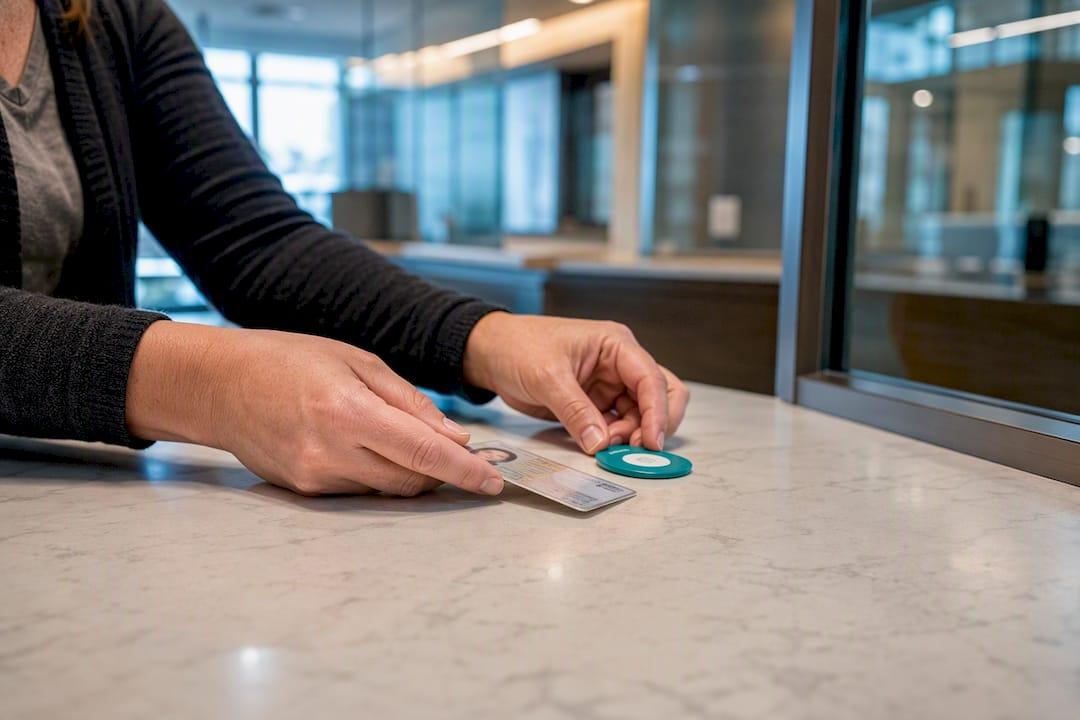
Municipal offices like Toronto charge a published $28.85 (HST included) for commission of a standard affidavit, and online providers often charge a flat per document fee around $25. In-person private notaries typically cost more once extras are added. The bigger question isn't the price gap. It's whether the person or organization asking for your affidavit will actually accept a remotely commissioned one, so confirm that before you book anything.
TL;DR:
- Municipal affidavit fees in Ontario typically range from $28.85 to $31.64 including HST, with larger costs associated with private or online services for added convenience.
- Only authorized officials like commissioners of oaths, notaries public, and justices of the peace can legally commission affidavits, with strict ID and signing procedures required.
- Online affidavit commissioning is legal under Ontario regulation, using live video to verify ID and witness signatures, often at a comparable or slightly higher cost than municipal offices.
- Booking in advance, completing all document sections beforehand, and confirming acceptance with the requesting organization are essential steps to avoid delays or re-dos.
- The most common mistakes are signing the affidavit prematurely and not verifying if remote commissioning is accepted, which can cause wasted fees and rejected documents.
Table of Contents
- How Much Does Affidavit Commissioning Cost in Ontario?
- Who Can Commission an Affidavit in Ontario?
- Is Online Affidavit Commissioning Legal in Ontario?
- What Drives the Final Price Up or Down?
- How to Prepare for Your Commissioning Appointment
- Municipal Office, Private Notary, or Online: Which Fits Your Situation?
- What Ken Sees Go Wrong Most Often
- Book Your Affidavit Commissioning Online With Theonlinenotary
- Sources
How Much Does Affidavit Commissioning Cost in Ontario?
The price you pay depends less on the document itself and more on who is stamping it. Municipal clerk offices publish flat, predictable rates. The City of Toronto charges $28.85 including HST for a provincial affidavit, and you need an appointment plus original photo ID to get it done. Brantford runs a nearly identical model: $31.64 including HST for an affidavit signature only, with every required signatory present and carrying valid ID.
Private in-person notaries and online commissioning services price things differently. Commercial online platforms commonly advertise flat per-stamp pricing, and one Canadian provider lists $24.95 plus HST per stamp for a straightforward affidavit signed over video. Multiple documents in the same session usually cost less per document than booking separate appointments, since the commissioner isn't repeating the ID check and setup work each time.
A few things to watch for:
- Municipal fees are usually quoted "including HST," so the number on the city's website is the number you pay.
- Private and online quotes aren't always tax-inclusive. Ask before you book.
- Certified true copies, extra pages, and rush requests almost always cost more than the base commissioning fee.
- Some municipal transactions, like certain city business or pension-related documents, may carry no fee at all.
Fee snapshot: Toronto's provincial affidavit rate ($28.85) and Brantford's affidavit signature rate ($31.64) sit close enough together that they function as a reasonable benchmark for what a no-frills, in-person municipal appointment should cost you almost anywhere in the province. Private and online providers generally price a modest premium above that for the convenience of flexible hours or not leaving your house.
Who Can Commission an Affidavit in Ontario?
Three types of officials are legally authorized to commission affidavits in Ontario: a commissioner of oaths, a notary public, and a justice of the peace. Lawyers and paralegals are automatically commissioners of oaths by virtue of their license. Many municipal employees, some employers, and select professionals also hold commissioner appointments specifically for public-facing services.
The rules around identification and signing matter as much as who does the stamping.
- Bring original, government-issued photo ID. A photocopy or expired ID will get you turned away.
- Anyone else named as a signatory in the document must also be present with their own valid ID.
- Do not sign the affidavit before you're in front of the commissioner. Signing early forces you to redo the document, and both Toronto and Brantford flag this explicitly as a common reason appointments fail.
- Municipal clerk offices almost always require a booked appointment. Walk-ins are rarely accommodated.
If your document needs a specific type of affidavit, it helps to understand the different categories before your appointment so you're not caught reformatting something at the last minute.
Is Online Affidavit Commissioning Legal in Ontario?
Yes. Remote commissioning is legal in Ontario under O. Reg. 431/20, which set out the framework allowing commissioners of oaths and notaries to witness signatures over live video rather than requiring physical presence. That regulation is the reason online affidavit services exist at all in this province, and it's what separates a legitimate video appointment from something a court or bank might reject outright.
The process itself follows a consistent pattern across providers:
- You book a secure video appointment with a licensed commissioner or notary.
- You show original government photo ID on camera, and the commissioner verifies it against the document.
- The jurat (the certification section) gets completed by the commissioner.
- You sign the affidavit while being directly observed on the call, not before it.
- You receive an electronic copy, sometimes followed by a mailed original if the recipient requires paper.
Pricing structures mirror the flat-fee model you'd see municipally. Online notarization providers in Canada commonly charge per stamp with HST added separately, and additional documents in the same call typically cost less than booking a second session entirely.
Pro Tip: Before booking any online appointment, call or email the organization that's actually asking for the affidavit, whether that's a court clerk, a bank, or IRCC, and ask directly if a remotely commissioned document will be accepted. Some courts still want an in-person original, and finding that out after paying for a video appointment wastes both your time and money.
What Drives the Final Price Up or Down?
The base commissioning fee is only part of the bill. What actually changes your total is a handful of predictable variables that show up across nearly every provider, municipal or private.
Signing multiple affidavits in one sitting is the easiest way to reduce your average cost per document, since most providers discount each additional document once the first is done. Certified true copies are billed separately from the commissioning fee itself, and providers that charge by the page will add up fast if your affidavit runs long with exhibits attached.
Other cost drivers to budget for:
- Expedited or same-day service often carries a surcharge, particularly with private notaries working around a tight court deadline.
- After-hours or weekend appointments, especially for mobile or travel-based notary visits, usually cost more than a standard weekday slot.
- Travel fees apply if you're asking a notary to come to you rather than visiting an office or booking video.
- HST is added to most private and online fees; municipal rates are typically quoted already including HST, so read the fine print on either side.
Municipal offices tend to sit at the low end of the range precisely because they're not marking up for convenience. Private and online services charge more for flexibility, not necessarily for a better legal outcome.
How to Prepare for Your Commissioning Appointment
Getting through an affidavit appointment quickly, and without a second visit, comes down to a short list of steps done in the right order.
- Fill in every section of the affidavit except your signature. Leave the signature line blank until you're in front of the commissioner.
- Gather your original government-issued photo ID, along with ID for anyone else who needs to sign the same document.
- Book your appointment ahead of time. Municipal clerk offices rarely take walk-ins, and most online providers work on scheduled slots too.
- Budget 10 to 20 minutes for a straightforward affidavit. More complex documents or multiple signatories take longer.
- Confirm how you'll receive your finished document, whether that's a digital scan, a mailed original, or both.
- Double-check with the recipient organization that they'll accept an online commissioning, and ask if you'll need certified copies for multiple parties.
A more detailed walkthrough of formatting and drafting requirements is available in Theonlinenotary's Ontario affidavit guide if you're preparing the document from scratch.
Municipal Office, Private Notary, or Online: Which Fits Your Situation?
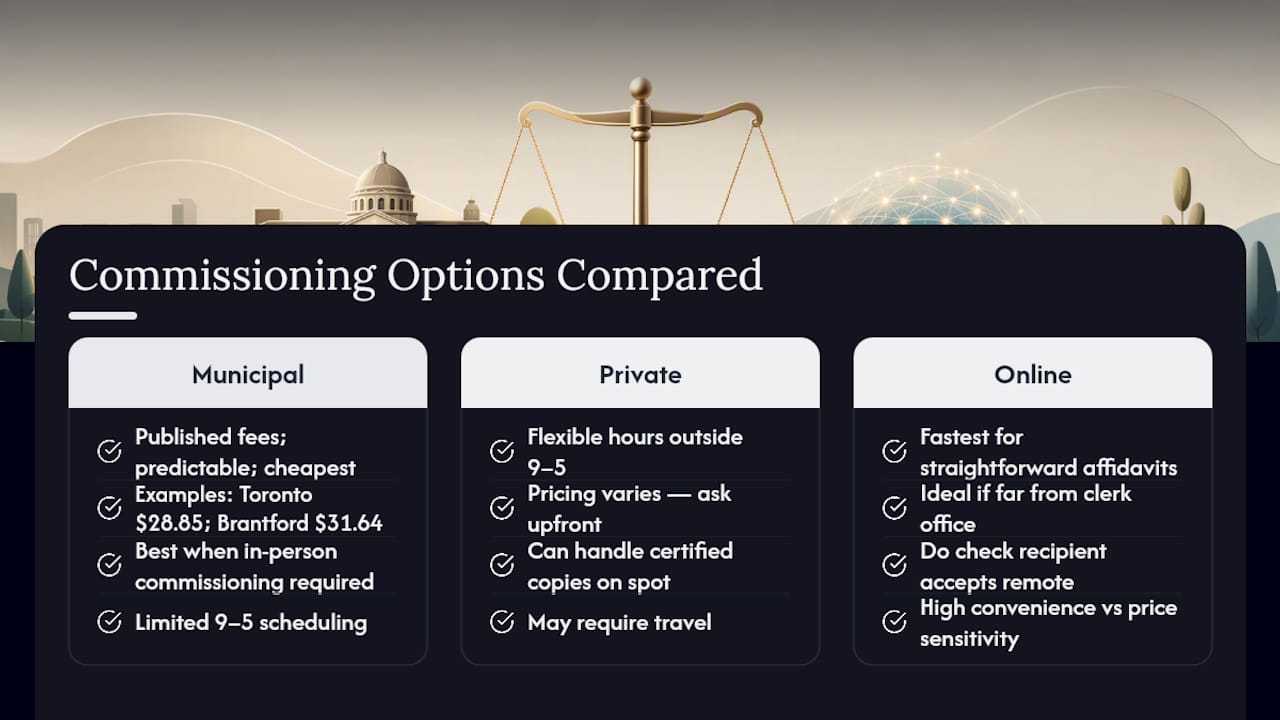
Municipal clerk offices work best when you need a court filing that specifically requires local, in-person commissioning, and you're not in a rush. Fees are published, predictable, and generally the cheapest option on the table.
Private in-person notaries make sense when you need flexible hours outside a 9-to-5 clerk's office, or you want certified copies handled on the spot. Pricing varies more here than anywhere else, so ask upfront.
Online commissioning is the practical choice when you're pressed for time, live far from a clerk's office, or simply want the appointment done from your kitchen table. Run through this before booking: how urgent is the deadline, will the recipient actually accept a remote commissioning, does location make an in-person visit impractical, and how much does price sensitivity matter compared to convenience. For most straightforward affidavits going to banks, employers, or provincial bodies, online commissioning through a service built around O. Reg. 431/20 compliance is the fastest path that still holds up.
What Ken Sees Go Wrong Most Often
The single most common mistake is signing the affidavit before the appointment, which forces a redo and wastes the fee already paid. The second is skipping the acceptance check. People book and pay for online commissioning, then discover the court or institution wanted an in-person original. Bringing a photocopy instead of original ID causes the same problem for a different reason. Online commissioning tends to be the better call whenever the recipient is flexible on format and speed matters more than paper originals.
— Ken
Book Your Affidavit Commissioning Online With Theonlinenotary
Theonlinenotary gets your affidavit commissioned without a drive to a clerk's office or a wasted afternoon waiting for an appointment slot. Every session runs through a secure video call under O. Reg. 431/20, with a licensed commissioner verifying your ID and completing the jurat while you're on camera, so the finished document holds up the same way an in-person one does.

Pricing is flat and stated upfront, with the structure explained in full on Theonlinenotary's fee page for affidavits and declarations, so there's no guessing what you'll owe before you commit to a booking. Turnaround is typically same-day, which matters when a court deadline or a bank request lands on short notice. Before booking, confirm with whoever is requesting your affidavit that a remotely commissioned document meets their requirements. Once you've confirmed that, book your appointment through Theonlinenotary's services page and get it handled in one video call.
This article is general information, not a substitute for advice from a qualified lawyer. Consult a qualified legal professional about your own circumstances before acting on anything here.