In Ontario, a notary public, or a lawyer who is also a notary, is normally the professional who certifies photocopies. Book a notary appointment, in person or online, to get a certified true copy. The one exception is documents like passports and vital records, which must go through the issuing government agency instead. Before you book anything, confirm what format the receiving organization actually wants.
TL;DR:
- Certified copies in Ontario must be fresh, typically issued within six to twelve months, to meet most organizations' acceptance criteria.
- Only licensed notaries public or lawyers with notary authority can certify photocopies by inspecting the original document in person or remotely.
- The certification process involves comparing original and copy, then signing, sealing, and wording the document with specific details, which adds legal weight.
- Passports and vital records cannot be certified by private notaries; these must be issued directly by government agencies like IRCC or ServiceOntario.
- Preparation, including confirming specific wording requirements with the receiving organization, minimizes delays and rejection risks during certification.
Table of Contents
- What Does Photocopy Certification in Ontario Actually Mean?
- Who Can Legally Certify a Copy in Ontario?
- How to Get a Photocopy Certified, Step by Step
- What Does Certified Copy Verification Cost, and How Long Does It Take?
- Which Documents Can't Be Certified by a Private Notary?
- Where in Ontario Can You Actually Get This Done?
- What to Bring, and the Mistakes That Get Copies Rejected
- What Actually Slows Down Certification, and Why It's Rarely the Notary's Fault
- Book a Certified Photocopy Through Theonlinenotary
- Sources
What Does Photocopy Certification in Ontario Actually Mean?
A certified true copy is not just a photocopy with a signature on it. It is a formal statement, made by an authorized person, that they personally compared a photocopy to the original document and found it to be a true and accurate reproduction. That comparison is the whole point. A notary can't certify a document they haven't physically inspected, and notarial guidance from Ontario practitioners confirms that a printed copy of a digital-only record often needs a different kind of notarial act altogether, not a standard certification.
The certification itself usually includes specific wording ("I certify this to be a true copy of the original document"), the notary's signature, the date, and either a stamp or a raised seal. That combination is what separates a certified copy from a notarized signature (where the notary only confirms who signed something) or a plain photocopy (which carries no legal weight at all).
People typically need certified copies for:
- Immigration applications (IRCC submissions, sponsorship files)
- Bank account openings or mortgage applications
- University or professional credential verification
- Legal proceedings requiring proof of identity or status
One detail trips up a lot of applicants: recency. Many receiving organizations expect a certified copy issued within the last six to twelve months, not one made years ago. If your certified copy is old, check before you submit it.
Who Can Legally Certify a Copy in Ontario?
A notary public, or a lawyer who holds notary authority, is the professional you want for this job. Both can inspect an original document, compare it to a photocopy, and issue a valid certification with their signature and seal. This is their standard function, and it's the answer to "who can certify photocopies in Ontario" in the overwhelming majority of cases.
Here's where people get tripped up: a commissioner of oaths or a commissioner for taking affidavits is not automatically authorized to certify copies. Those roles exist to witness signatures on affidavits and statutory declarations, a different function entirely. Some commissioners also hold notary credentials, but that's not guaranteed, and assuming it is can cost you a wasted trip.
Quick reference: certifiers in Ontario
- Notary public: Yes, can certify true copies
- Lawyer who is also a notary: Yes, can certify true copies
- Commissioner of oaths (without notary status): Usually no
- Paralegal (without notary status): Usually no, unless separately commissioned
Public Safety Canada's guidance on acceptable certifying officials for applications lists specific categories, and it's worth checking that list directly if your receiving organization has particular requirements. When in doubt, ask the professional upfront: "Are you a licensed notary public?" It's a fair question, and any legitimate notary will answer it without hesitation.
How to Get a Photocopy Certified, Step by Step
The process is straightforward whether you go in person or use an online notary that serves Ontario. Here's how it works:
- Gather your original document. You need the actual original, not a copy of a copy. Notaries are required to physically inspect the source document before certifying anything.
- Make a photocopy, or have the notary make one. Some notary offices will photocopy the document for you on-site, often for a small added fee. Others expect you to bring your own copy.
- Bring valid photo ID. A driver's license, passport, or Ontario photo card usually works. Some receiving organizations specify which ID types they'll accept, so check ahead.
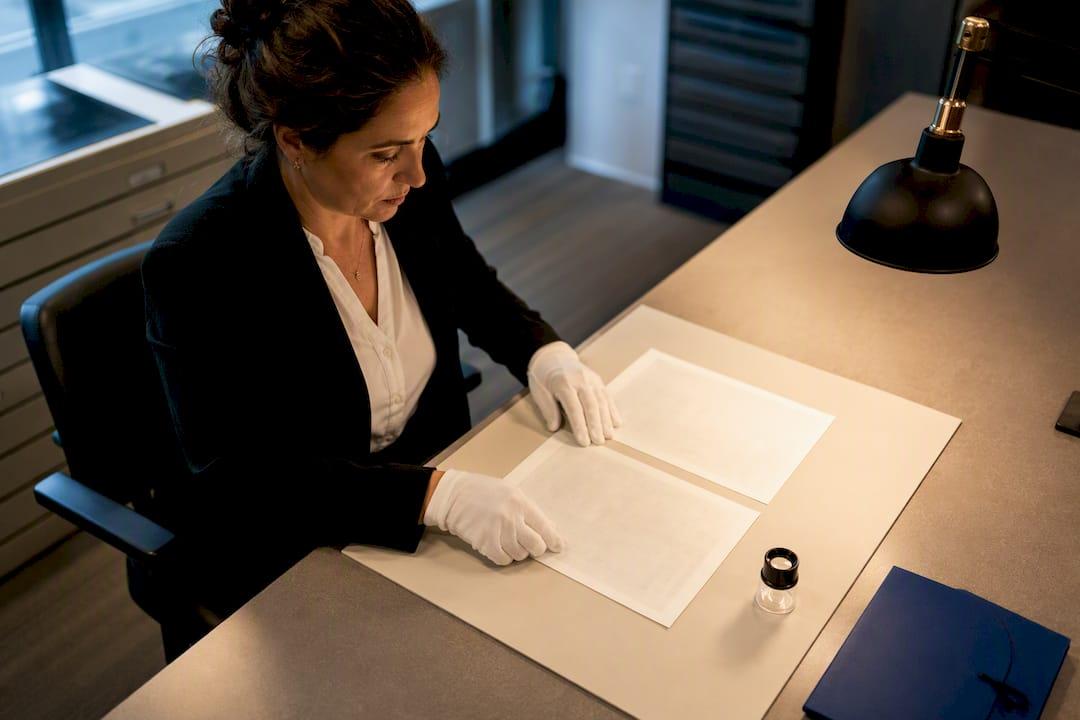
- Let the notary compare original to copy. This is the actual certification act: side-by-side comparison, page by page if the document has multiple pages.
- Receive the signed, sealed copy. The notary adds the certification wording, signs, dates it, and applies a stamp or seal. Multi-page documents sometimes get a cover sheet instead of a stamp on every page.
Online notarization can handle this for many document types, since Ontario permits remote notarization for various declarations and certifications. But there's a hard limit: a notary still needs to see the physical original, even remotely via video, which means some documents (particularly those requiring a wet-ink seal for a specific receiving institution) may still require an in-person appointment.
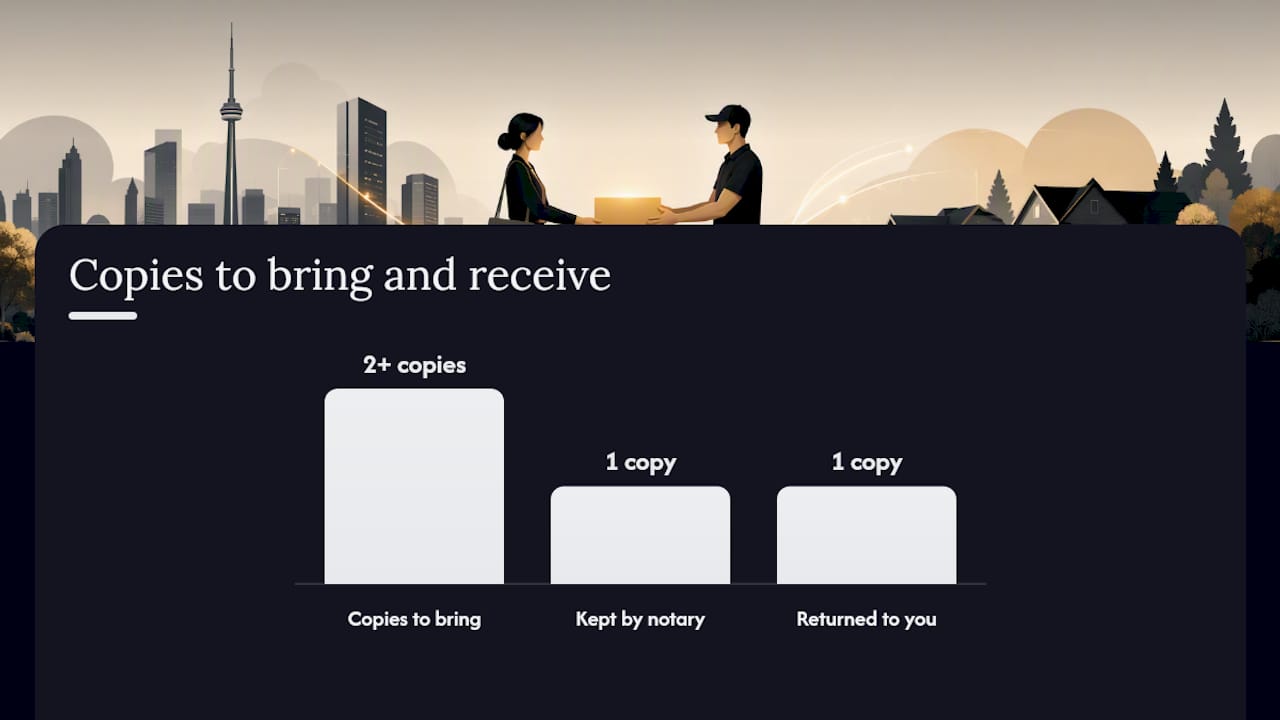
Pro Tip: Bring the original plus at least two photocopies to your appointment. Notaries often keep one stamped copy on file and hand you the rest already certified, which saves you a second trip and an extra copying fee.
If you're unsure whether your situation calls for online or in-person service, this guide to obtaining certified copies in Ontario walks through both paths in more detail.
What Does Certified Copy Verification Cost, and How Long Does It Take?
Private notary fees for certified true copies vary by office, but a few patterns hold across Ontario:
- The first certified copy of a document typically costs more than additional copies of the same document made in the same visit.
- Same-day service is common at walk-in notary offices and through most online notary services, often completed within the same appointment.
- Multi-page documents may cost more than single-page ones, as some notaries charge additional fees for extra pages.
Government-issued certified copies work on a completely different timeline. If you need a certified true copy of a passport or travel document, that request goes through IRCC's Passport Program, not a private notary, and processing can take longer than a same-day notary visit.
If your deadline is tight, book your notary appointment early rather than assuming walk-in availability. For government-issued documents, ask directly about expedited processing options when you submit your request, since standard timelines don't always match urgent deadlines like visa interviews or closing dates.
Which Documents Can't Be Certified by a Private Notary?
Some documents simply aren't a notary's to certify, no matter how willing the notary is. Passports and other travel documents fall into this category. Certified true copies of a Canadian passport come through IRCC's certified true copy process, with specific mailing addresses for requests from inside and outside Canada. A private notary certifying a passport copy usually won't satisfy an institution that specifically requires the government's certification.
Vital records work the same way. Birth, marriage, and death certificates need to be ordered directly from ServiceOntario or the relevant provincial registry, not certified by a private notary using a photocopy of an existing certificate.
The rule of thumb: if a government agency issued the original, that same agency (or its designated process) usually needs to issue the certified copy. Always confirm this directly with whoever is requesting the document. Requirements shift by institution, and a five-minute phone call beats a rejected application.
Where in Ontario Can You Actually Get This Done?
Ontario offers a few real options, and picking the right one depends on speed, document type, and whether the receiving party insists on a physical wet seal.
- In-person notary offices and law firms. These typically offer same-day service and a physical stamped seal, which some banks, embassies, and universities specifically require.
- Some paralegals with notary credentials. Availability varies, so confirm notary status before booking, not after.
- Online notary services. These work well for many Ontario residents who need convenience and can't get to an office during business hours. Remote certification workflows handle a wide range of document types, though physical original inspection requirements still apply.
Before you commit to any option, call the receiving party, whether that's an embassy, a bank, IRCC, or a university admissions office, and ask exactly what they need. Consular and embassy pages often spell out country-specific certification formats, and those requirements don't always match what you'd assume.
What to Bring, and the Mistakes That Get Copies Rejected
Show up prepared and you'll avoid the most common holdups. Bring:
- Government-issued photo ID (a second piece of ID if the receiving organization asks for it)
- The actual original document, not a copy
- Clean, legible photocopies if you're not having the notary make them on-site
The rejections that happen again and again come down to a short list of avoidable errors: wording that doesn't match what the receiving institution specified, certifying a photocopy of a photocopy instead of the true original, submitting an expired document, or handing over a photocopy so faded it's barely readable.
Pro Tip: Before you leave the notary's office, check that the date, signature, and seal are all present and that the certification wording matches what your receiving institution asked for. A thirty-second check on-site beats a rejected application weeks later.
For a full rundown of acceptable ID types before your appointment, this identification requirements guide covers what Ontario notaries typically expect.
What Actually Slows Down Certification, and Why It's Rarely the Notary's Fault
Most delays and rejections in this process don't come from bad notaries. They come from applicants who never confirmed what the receiving institution wanted before showing up. A bank wants one wording. An embassy wants another. IRCC has its own format entirely, and it doesn't accept a private notary's copy of a passport under any circumstances.
The conventional advice tells people to "just get it certified," as if certification is one uniform product. It isn't. A certified copy that satisfies a Canadian bank can bounce right back if a foreign consulate wanted a specific phrase in the certification statement. That mismatch is the single biggest cause of wasted trips, not notary error, not paperwork quality, not timing.
The fix is almost embarrassingly simple: call or email the receiving party first, get their exact wording requirements in writing if possible, then book the notary. Skipping that one step is how people end up making two appointments instead of one.
— Ken
Book a Certified Photocopy Through Theonlinenotary
You can book an online notary appointment for many document types without leaving home, and in-person services with a physical wet-seal copy are also available in Brampton.

Booking works the same way regardless of which service you choose: you provide the document details and bring valid photo ID, with the certification wording checked before finalizing to help reduce mismatches that cause rejections. The process is designed to be sufficiently timely for urgent deadlines in many cases.
Ready to get started? Check Theonlinenotary's services page for current offerings and to book your appointment, online for Ontario-wide service or in person if you're near Brampton.