

Remote witnessing in Ontario typically runs $40 to $100 for a straightforward document like an affidavit or statutory declaration, while remote witnessing of a will or power of attorney costs more because it demands extra legal oversight. Theonlinenotary and other Ontario providers price by document type, not a flat rate. The single biggest driver of your final bill is whether the document requires notarization on top of witnessing, and how many signers or pages are involved.
TL;DR:
- Notarization costs for documents like wills or powers of attorney are significantly higher due to added legal oversight and verification requirements.
- The overall fee is primarily influenced by document type, the number of signers and witnesses, and whether notarization or just witnessing is needed.
- Remote witnessing fees usually range from $40 to $80 for simple affidavits and can exceed $200 for complex wills with multiple witnesses and same-day booking.
- Providers often charge extra for additional pages, rush appointments, or documents headed for out-of-province use, which can substantially increase costs.
- Confirming Ontario licensing, clear pricing, and understanding specific witness rules help avoid hidden fees and costly rejection of documents.
Table of Contents
- What You Pay For: Common Invoice Items in Ontario Remote Witnessing
- Concrete Factors That Raise or Lower Price in Ontario
- Sample Pricing Examples for Common Ontario Scenarios
- Step-by-Step Remote Witnessing Process and Checklist for Ontario
- How to Evaluate Providers and What to Ask to Avoid Hidden Fees
- Why a Local Ontario Focus Prevents Costly Mistakes
- How Theonlinenotary Charges and How to Book
- Sources
What You Pay For: Common Invoice Items in Ontario Remote Witnessing
A remote witnessing invoice in Ontario usually breaks into a few predictable line items, and knowing them upfront keeps you from getting surprised at checkout. In-person notary fees across the province commonly land between $40 and $75 per document, and virtual witnessing often adds a premium on top of that baseline because the provider takes on more identity-verification work over video.
Here's what typically shows up on a quote:
- Base witnessing or notarization fee — the core charge for the appointment and signature verification.
- Per-page or additional-document fees — most providers charge more once you go past a set page count or add a second document to the same call.
- Witness fees — some documents need two witnesses, which can mean an added line item if the provider supplies them.
- Virtual-witnessing premium — this can run $50 to $150 above the standard fee for wills specifically, reflecting the added scrutiny that reduces the odds of a later probate challenge.
- Rush or same-day surcharges — booking outside normal scheduling windows almost always costs extra.
A typical Ontario invoice for a single sworn affidavit might read: base fee $50, no extra pages, no rush charge, total $50. Compare that to a remote will signing with two witnesses and a same-day booking, and the total can climb past $200 once every line item stacks up. Theonlinenotary's affidavit and declaration fee guide breaks down comparable examples for readers pricing out their own documents.
Concrete Factors That Raise or Lower Price in Ontario
Your final cost depends less on the provider and more on the document itself. A simple statutory declaration for a school or government form costs far less than a will, because Ontario law treats testamentary documents with much stricter formality.
Four factors move the number most:
- Document type and complexity — wills and powers of attorney require more legal care than a standard affidavit, and that shows up in the fee.
- Number of signers and witnesses — Ontario's Substitute Decisions Act requires two witnesses for a power of attorney, so a document needing multiple witnesses costs more than one needing a single commissioner.
- Notarization vs. commissioning — commissioning an affidavit is often cheaper than full notarization, but institutions like banks or land registry offices sometimes prefer or demand the notarized version even when Ontario law doesn't strictly require it.
- Extra requirements — certified copies, translations, or documents headed for use outside Canada (which may need further authentication) add both time and cost.
Pro Tip: Ask upfront whether your document is going to a bank, a land registry office, or an out-of-province institution. If so, request notarization even if witnessing alone would technically satisfy Ontario law. It's cheaper to pay once than to redo the document after a rejection.
Sample Pricing Examples for Common Ontario Scenarios
Rough numbers help more than abstract ranges, so here's what real scenarios tend to cost across the province.
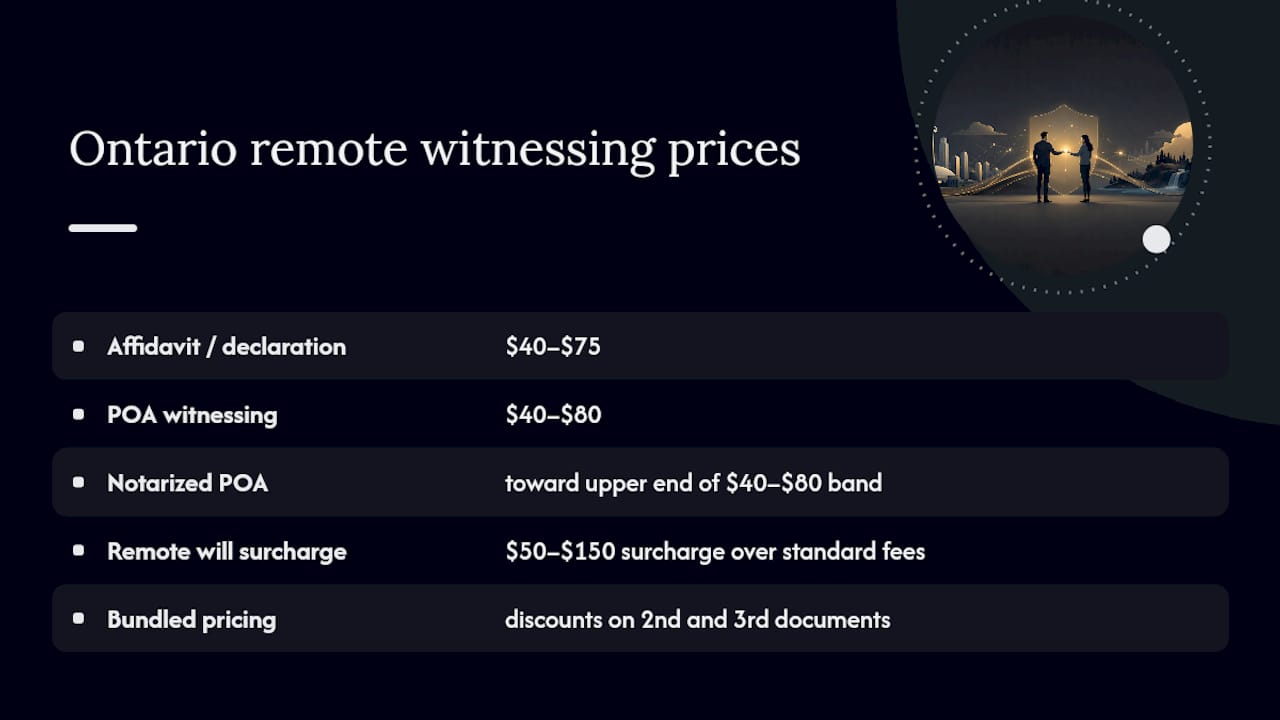
A simple affidavit or statutory declaration for something like an identity confirmation or a school-related sworn statement typically falls in the $40 to $75 range, matching the standard notary fee benchmark cited by legal guides for straightforward, single-signer documents.
Power of attorney witnessing usually costs $40 to $80 when it's witnessing alone, since Ontario doesn't require notarization for a POA used domestically. Add notarization, which many banks and institutions request anyway, and the price shifts toward the upper end of that band or slightly above it, based on common notarization fee guidance for Canadian documents.
Remote will witnessing carries the steepest premium of the group. Providers apply a $50 to $150 surcharge over standard fees because virtual witnessing of a will demands extra verification steps to reduce the risk of a later probate dispute. That premium isn't padding. It reflects real legal exposure if a will gets contested and the witnessing process comes under scrutiny.
If you're booking multiple documents in one session, ask about bundled pricing. Many providers, including Theonlinenotary, discount the second and third document when signed in the same appointment, since the setup and ID verification only happen once.
Step-by-Step Remote Witnessing Process and Checklist for Ontario
Getting through a remote witnessing appointment without delays comes down to preparation. Miss a step and you'll likely pay for a second booking.
- Gather your unsigned documents. Never sign in advance. The witness needs to watch you sign in real time.
- Prepare acceptable ID. A government-issued photo ID (driver's license or passport) is standard; confirm accepted formats with your provider before the call.
- Confirm the witness policy. Ask whether the provider supplies a second witness if your document requires two, and whether that adds a fee.
- Join the video session. The commissioner or notary verifies your identity, watches you sign each page, and records the witnessing on the spot.
- Receive your completed documents. Most Ontario providers deliver signed, notarized digital copies within the same day, and appointments for a single document typically run 15 to 30 minutes.
Before you book, have ready:
- A valid, unexpired government photo ID
- The unsigned document, reviewed for accuracy
- Names and contact details for any required witnesses
- A payment method and confirmation of the total quoted fee
How to Evaluate Providers and What to Ask to Avoid Hidden Fees
Cheap pricing means nothing if the provider isn't properly authorized. Before booking anywhere, confirm the commissioner or notary is licensed to act in Ontario, not just generically "online."
Ask these questions before you pay anything:
- Is the person conducting the session a licensed Ontario notary or commissioner of oaths?
- Does the quoted fee include witnesses, notarization, and certified copies, or are those extra?
- What's the cancellation or refund policy if the document doesn't meet institutional requirements?
- Will the provider walk you through Ontario's specific witnessing rules before the appointment?
Walk away from providers with vague pricing, no visible Ontario credentials, or anyone rushing you past proper ID verification. Legitimate services post clear rates and reference Ontario-specific legal guidance rather than generic, one-size-fits-all disclaimers.
Why a Local Ontario Focus Prevents Costly Mistakes
Most expensive mistakes I've seen with remote witnessing don't come from high prices. They come from picking a generic service that doesn't understand Ontario's witness rules, then having a bank or the courts reject the document months later. Theonlinenotary built its guides specifically around Ontario's requirements because the fix for a rejected POA or a contested will costs far more than the notarization fee ever would. If you want predictable costs, choose a provider that specializes in your province, not the internet's version of "anywhere."
— Ken
How Theonlinenotary Charges and How to Book
Theonlinenotary is the direct, Ontario-based alternative to guessing your way through a generic online notary directory: you get a licensed Ontario commissioner or notary, published pricing, and same-day appointments built specifically around provincial witnessing rules.

Theonlinenotary handles affidavits, statutory declarations, invitation letters, powers of attorney, and remote will witnessing for individuals and businesses across Ontario. Standard appointments include identity verification, live video witnessing, and delivery of your signed document the same day, with notarization added whenever your bank, employer, or another institution requires it. Pricing is set per document with clear add-ons for extra pages or rush requests, so you know the total before you commit.
Ready to see exact rates for your document type? Visit the Theonlinenotary services page to check pricing and book a remote appointment today.
Sources
- How to Properly Sign and Witness a Will in Ontario | Canada Lawyer Directory | Find Law Firms & Legal Services
- Power Of Attorney Notarization Ontario 2026 | POA Guide
This article is general information, not a substitute for advice from a qualified lawyer. Consult a qualified legal professional about your own circumstances before acting on anything here.